Repost: Lessons for the bereaved
It’s short, bullet form and exactly as surgically clear/simple as a person in pain needs.
Repost: Lessons for the bereaved
It’s short, bullet form and exactly as surgically clear/simple as a person in pain needs.
How to really leave no child behind…
“Whatever it takes” is an attitude that drives not just Kirkkojarvi’s 30 teachers, but most of Finland’s 62,000 educators in 3,500 schools from Lapland to Turku—professionals selected from the top 10 percent of the nation’s graduates to earn a required master’s degree in education. Many schools are small enough so that teachers know every student. If one method fails, teachers consult with colleagues to try something else. They seem to relish the challenges. Nearly 30 percent of Finland’s children receive some kind of special help during their first nine years of school. The school where Louhivuori teaches served 240 first through ninth graders last year; and in contrast with Finland’s reputation for ethnic homogeneity, more than half of its 150 elementary-level students are immigrants—from Somalia, Iraq, Russia, Bangladesh, Estonia and Ethiopia, among other nations. “Children from wealthy families with lots of education can be taught by stupid teachers,” Louhivuori said, smiling. “We try to catch the weak students. It’s deep in our thinking.”
When Ros and I were looking at schools to place our daughters in, we did a lot of research and found that there is literally only one school in Calgary (Charging about $14k/child/yr) that would publicly state: “We are responsible for your child’s education. If your child is not learning it is our problem. We ask you sit your child down to do homework, but please do not assist. If your child can not complete the homework assigned, we want to know.” Apparently, in Finland, it’s national education policy standard.
There are no mandated standardized tests in Finland, apart from one exam at the end of students’ senior year in high school. There are no rankings, no comparisons or competition between students, schools or regions. Finland’s schools are publicly funded. The people in the government agencies running them, from national officials to local authorities, are educators, not business people, military leaders or career politicians. Every school has the same national goals and draws from the same pool of university-trained educators. The result is that a Finnish child has a good shot at getting the same quality education no matter whether he or she lives in a rural village or a university town. The differences between weakest and strongest students are the smallest in the world, according to the most recent survey by the Organization for Economic Co-operation and Development (OECD). “Equality is the most important word in Finnish education. All political parties on the right and left agree on this,” said Olli Luukkainen, president of Finland’s powerful teachers union.But, here we pressure and torture our children by grading them against each other and shaming them when they show up at the bottom of the pile:
In the United States, which has muddled along in the middle for the past decade, government officials have attempted to introduce marketplace competition into public schools. In recent years, a group of Wall Street financiers and philanthropists such as Bill Gates have put money behind private-sector ideas, such as vouchers, data-driven curriculum and charter schools, which have doubled in number in the past decade. President Obama, too, has apparently bet on competition. His Race to the Top initiative invites states to compete for federal dollars using tests and other methods to measure teachers, a philosophy that would not fly in Finland. “I think, in fact, teachers would tear off their shirts,” said Timo Heikkinen, a Helsinki principal with 24 years of teaching experience. “If you only measure the statistics, you miss the human aspect.”And, our failure rates speak for themselves:
Ninety-three percent of Finns graduate from academic or vocational high schools, 17.5 percentage points higher than the United States, and 66 percent go on to higher education, the highest rate in the European Union. Yet Finland spends about 30 percent less per student than the United States.Not only do they spend less money, the children spend even less time cooped up in school pretending to learn:
Teachers in Finland spend fewer hours at school each day and spend less time in classrooms than American teachers. Teachers use the extra time to build curriculums and assess their students. Children spend far more time playing outside, even in the depths of winter. Homework is minimal. Compulsory schooling does not begin until age 7. “We have no hurry,” said Louhivuori. “Children learn better when they are ready. Why stress them out?”
And, the teachers are highly respected as well — to say nothing of very highly trained at Government expense:
Practically speaking—and Finns are nothing if not practical—the decision meant that goal would not be allowed to dissipate into rhetoric. Lawmakers landed on a deceptively simple plan that formed the foundation for everything to come. Public schools would be organized into one system of comprehensive schools, or peruskoulu, for ages 7 through 16. Teachers from all over the nation contributed to a national curriculum that provided guidelines, not prescriptions. Besides Finnish and Swedish (the country’s second official language), children would learn a third language (English is a favorite) usually beginning at age 9. Resources were distributed equally. As the comprehensive schools improved, so did the upper secondary schools (grades 10 through 12). The second critical decision came in 1979, when reformers required that every teacher earn a fifth-year master’s degree in theory and practice at one of eight state universities—at state expense. From then on, teachers were effectively granted equal status with doctors and lawyers.
Essentially, you stop treating teachers like they are idiots, they develop pride in their work and make it their mission to help children learn — instead of just putting on a tolerable performance so they keep their jobs:
Applicants began flooding teaching programs, not because the salaries were so high but because autonomy and respect made the job attractive. In 2010, some 6,600 applicants vied for 660 primary school training slots, according to Sahlberg. By the mid-1980s, a final set of initiatives shook the classrooms free from the last vestiges of top-down regulation. Control over policies shifted to town councils. The national curriculum was distilled into broad guidelines. National math goals for grades one through nine, for example, were reduced to a neat ten pages. Sifting and sorting children into so-called ability groupings was eliminated. All children—clever or less so—were to be taught in the same classrooms, with lots of special teacher help available to make sure no child really would be left behind. The inspectorate closed its doors in the early ’90s, turning accountability and inspection over to teachers and principals. “We have our own motivation to succeed because we love the work,” said Louhivuori. “Our incentives come from inside.”
So much so that they no longer even need government supervision — they want to excel from the depths of the pride in who they are and the honor they receive from society.
Some of the more vocal conservative reformers in America have grown weary of the “We-Love-Finland crowd” or so-called Finnish Envy. They argue that the United States has little to learn from a country of only 5.4 million people—4 percent of them foreign born. Yet the Finns seem to be onto something. Neighboring Norway, a country of similar size, embraces education policies similar to those in the United States. It employs standardized exams and teachers without master’s degrees. And like America, Norway’s PISA scores have been stalled in the middle ranges for the better part of a decade.
Oh, and it’s not just some European thing where that people group somehow does better either. Though, it just may have something to do with a national policy of treating everyone fairly decently:
It’s almost unheard of for a child to show up hungry or homeless. Finland provides three years of maternity leave and subsidized day care to parents, and preschool for all 5-year-olds, where the emphasis is on play and socializing. In addition, the state subsidizes parents, paying them around 150 euros per month for every child until he or she turns 17. Ninety-seven percent of 6-year-olds attend public preschool, where children begin some academics. Schools provide food, medical care, counseling and taxi service if needed. Student health care is free.
And the moral of the story is: Take care of people, treat them with respect and give them the tools to do their jobs and they will take pride in their work and give you one of the best education systems in the world. Don’t be a dick to children, make sure they get to spend lots of time being mothered, feed them, make sure they are healthy and unstressed and they will learn better then most of the world.
Whodathunkit???
Well, certainly not our brilliant and fearless leader — who is busy exporting both our worst educational failures and the associated testing systems to the rest of the world…
The reality of Social Services interventions
American Psychological Association
CPS involvement did not improve long-run outcomes, a 2010 study found. Such involvement sometimes harms children by taking them from their families unnecessarily – which, in my office’s experience, happens more than 100 times each year in the District. These removals traumatize children and devastate families.
I wish I could disagree with the study, but, while I have always followed the code drilled into me at least once every month of my training and constantly by every brief of the laws I am under, about 2/3rds of the time, I ended up wishing I had not. Most of the time, it’s like watching an episode of some sort of absurdist sitcom entitled, “The invasion of the mental munchkins.”
The same is true when adults report rapes etc. It’s been my experience that less then 2-3% of the offenders ever see a night in jail – while the victims get to experience a system that pretty much torments them for months and leaves them tormenting themselves long after. I’d say that the majority of the PTSD symptoms that later emerge are not the result of the rape but, rather, the result of police and social services stupidity.
As sad as it is to say, it’s getting so therapists need to issue guidelines for reporting to them…
Just a few of the things that are never taught in the ivory castles of education by those who epitomize the statement that, “Those who can, do, the rest teach,” to say nothing of even being remotely grasped by the legal system…
Stress and our breaking wave of, “Conditions.”
Via: democracynow.org
Dr. Maté’s work focuses on the centrality of early childhood experiences to the development of the brain, and how those experiences can impact everything from behavioral patterns to physical and mental illness. While the relationship between emotional stress and disease, and mental and physical health more broadly, is often considered controversial within medical orthodoxy, Dr. Maté argues too many doctors seem to have forgotten what was once a commonplace assumption, that emotions are deeply implicated in both the development of illness, addictions and disorders, and in their healing. [includes rush transcript]
All I have to add is: Thank you medical community — it’s SO about time!!!
Promises In Spite of Your Past
Overcoming A Bad Family Background – Grace Walk Ministries:::Sharing the Love & Life of Christ:
“Don’t be held captive by your past. It isn’t necessary to pretend your heritage is something other than what it really was, but you don’t have to be held back by it. When Jesus Christ gave you His life, His past became your past. You received a new heritage. The new you has been in Him since the foundation of the world. (See Ephesians 1:4) You aren’t who you used to be. (See 2 Corinthians 5:17) You aren’t the sum of your family’s past. You are who God made you to be – a divine work of art (see Ephesians 2:10), endowed with supernatural potential (see Philippians 4:13). In Christ, your future is as bright as the promises of God! Don’t allow yourself to be trapped by lies which suggest that you’ll never make it in life. You will make it because you have been delivered from your background. Your future hinges on the loving faithfulness of God and He can be trusted. The Psalmist wrote: ‘Your goodness is so great! You have stored up blessings for those who honor you. You have done so much for those who come to you for protection, blessing them before the watching world!’ (Psalm 31:19) “
This is an inspiring article! I pray this article for us, our families, friends, schools, clients, and world.
“non-REM Sleep The type of sleep not associated with dreams. There is some thinking in non-REM sleep but it is usually simple and fragmented. There are 4 sub-stages to non-REM sleep: Stage 1 sleep: Is a transition from being awake to being asleep. Is almost worthless in terms of restorative value. Although you may be asleep you may also still be partially conscious. Stage 2 sleep: Deeper than Stage 1 and is thought to aid in body recovery. Stages 3 and 4: Also called Delta sleep. Delta sleep is a very deep sleep that is primarily associated with restoration / body recovery. REM Sleep”
Suggestions to Avoid Sleeping On Back
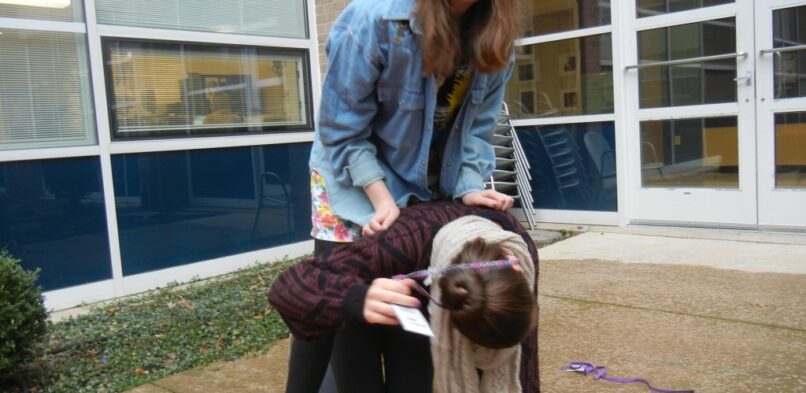
“Avoid sleeping on your back. Many people only snore or stop breathing while sleeping on their back. In such cases, avoidance of this position during sleep reduces both snoring and apnea. There are some simple procedures that can be used to reduce sleeping on your back such as attaching a sock to the back of your nightshirt with 1 or 2 tennis balls. Each time you roll onto your back, the discomfort will prompt you to roll onto your side. In time, you will favor sleeping on your side. Ask your doctor if your sleep study demonstrated whether your sleep apnea occurred only on your back.”
“Eat regular meals and a healthy balanced diet. If you feel hungry in the evening, have a light snack or a glass of milk. Heavy meals close to bedtime can result in discomfort and sleep disturbance. Take Calcium 500 mg and Magnesium 250 mg with a light snack to aid in relaxation (mild muscle relaxant). Always check with your doctor before taking a supplement. Above all, don’t try too hard. If you can’t fall asleep, don’t lie in bed anxious and frustrated. If it has been 20 to 30 minutes, leave your bedroom to read, watch TV, or do something else to relax, going back to bed only when you feel sleepy again. If you are a clock-watcher, turn the clock around. Do meditation, yoga or self-hypnosis to help with stress and sleep.”
Foothills Hospital Sleep Clinic
“espiratory Homecare Companies There are several homecare companies within Calgary that we use for our trials of CPAP. These companies can also perform the same at-home sleep study (SnoreSat) to diagnose obstructive sleep apnea. You: Need to be referred directly to the company by your family physician. Will be charged for the SnoreSat (approximately $150). This is the only fee that will be charged. If you purchase a CPAP machine you would either pay for it yourself or have insurance coverage. This is no different than if you came to the Sleep Centre. Results will be interpreted by a sleep specialist but you do not see the specialist. Family doctor discusses the results with you and gets you on the appropriate therapy (CPAP, dental appliance, urgent referral to the Sleep Centre…) The companies are likely able to do this testing within 2 weeks. Once you follow-up with your family physician they are also able to get you onto CPAP therapy within a couple of weeks. This is a very quick, safe approach for many patients to be assessed for obstructive sleep apnea. ”
“Private Sleep Clinics There are 2 private sleep clinics in Calgary that can diagnose and treat any sleep disorder. The following table compares both clinics: Updated April 14, 2008 Canadian Sleep Institute Centre for Sleep and Human Performance Referral from family physician required? Yes Yes Fees for at-home sleep study Yes Yes Fees for polysomnography (in-clinic sleep study) Yes Yes At both clinics the sleep specialist will discuss your results and follow-up your treatment progress. The main advantage to going to the private clinics is that they have a shorter waitlist than the Sleep Centre. There may be fees associated with each clinic visit.”